
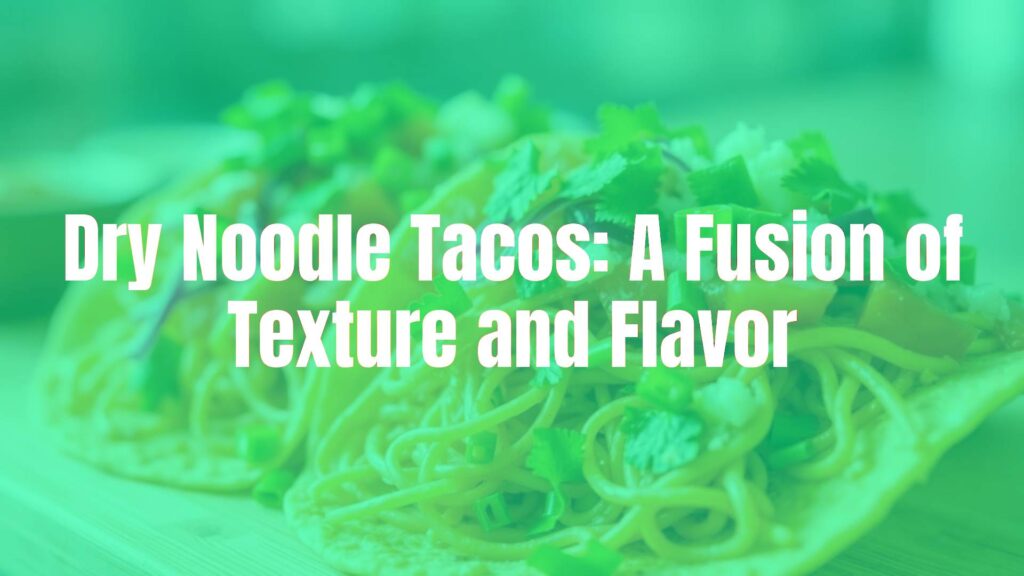
Introduction to Dry Noodle Tacos
Dry noodle tacos present a creative fusion of Mexican and Asian-inspired cuisine, bringing together the crisp comfort of dry noodles with the familiar portability of tacos. Unlike traditional tacos filled with meats and salsas, these inventive tacos rely on the playful texture and robust flavors of dry noodles as a primary filling, resulting in a dish that’s both surprising and satisfying.
Distinctive Characteristics of Dry Noodle Tacos
The most defining feature of dry noodle tacos is the use of cooked, drained, and seasoned noodles—often prepared to be slightly crunchy or al dente—to fill a taco shell or tortilla. The noodles, typically wheat-based such as ramen or chow mein, are cleverly combined with a variety of flavorings, vegetables, and proteins to create a savory and texturally intriguing bite. The blending of noodle texture with the structure of a taco introduces a unique balance of chewiness, crispness, and satisfying comfort.
Origins and Culinary Influences
Dry noodle tacos are a relatively new addition to the diverse world of tacos, emerging from contemporary food trends that celebrate cross-cultural experimentation. With the global popularity of both Asian noodle dishes and Mexican tacos, adventurous chefs and home cooks began combining the two, leading to a dish that captures the imagination and taste buds of those eager to try playful food mashups. While not rooted in long-standing tradition, dry noodle tacos reflect the evolving nature of street food and urban fusion cuisine in cosmopolitan centers.
Essential Components and Preparation Approach
At the heart of every dry noodle taco lies a base of seasoned noodles, often stir-fried or tossed with flavorful oils, soy or tamari sauce, and sometimes aromatic ingredients like ginger or garlic. Filling additions such as thinly sliced vegetables (carrots, bell peppers, cabbage), crunchy toppings (peanuts, fried onions), and proteins (tofu, chicken, shredded pork) are common, contributing extra layers of taste and visual appeal. Typically, the filling is layered into classic corn or flour tortillas, or in some creative interpretations, into crispy taco shells, which accentuate the contrast in textures.
Popular Variations and Ingredient Substitutions
Dry noodle tacos are highly adaptable, making them a favorite for experimentation. Vegetarian and vegan versions utilize tofu or tempeh, while omnivorous adaptations might add strips of grilled beef or chicken. For gluten-free variations, rice noodles or gluten-free tortillas may be substituted. Some renditions embrace bold flavors by incorporating spicy chili sauces, fresh herbs like cilantro, or a dash of sesame seeds. Others go for crunch by topping with slivered green onions or pickled vegetables for brightness and tang.
Serving Suggestions and Pairings
When serving dry noodle tacos, presentation can be as playful as the concept. Garnish with a squeeze of lime, a drizzle of spicy mayonnaise, or a handful of fresh herbs. These tacos are well complemented by light, crisp beverages such as sparkling water with citrus, Asian-style lagers, or even a tart agua fresca. For a heartier meal, serve alongside an Asian-inspired salad or a refreshing jicama slaw for a perfect harmony of flavors and textures.
Conclusion
Dry noodle tacos embody the spirit of culinary innovation, delivering an exciting combination of familiar tastes in a wholly new format. Their adaptability and diverse range of flavor possibilities make them an appealing option for food lovers open to inventive eating experiences. Whether enjoyed as a street snack, a fun family dinner, or the highlight of a party platter, dry noodle tacos demonstrate how boundary-crossing creativity can create delicious new classics.
