
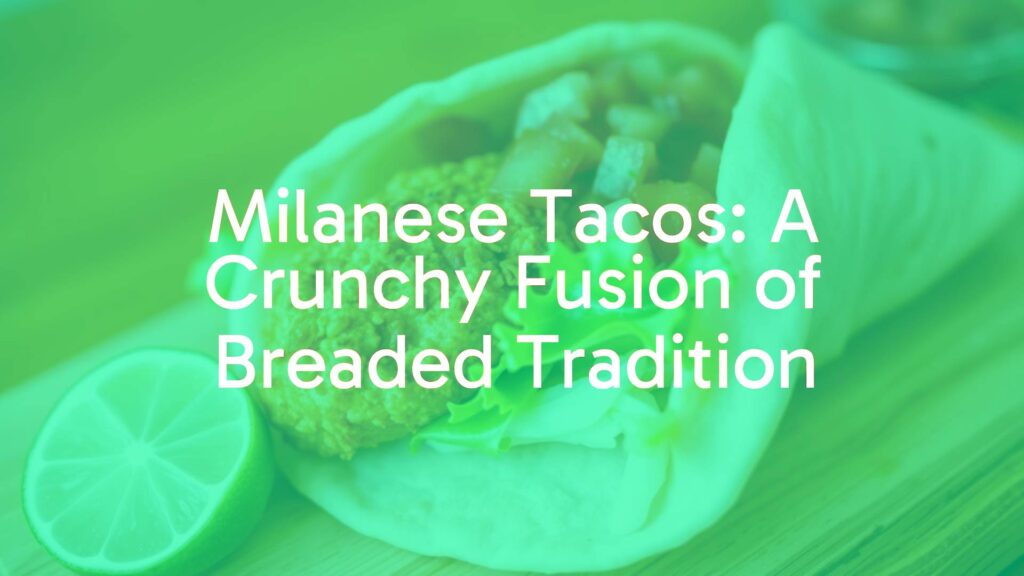
Introducing Milanese Tacos
Milanese tacos are a delectable hybrid that brings together the crispy allure of breaded meat with the unmistakable charm of soft corn or flour tortillas. Popular in various regions of Mexico, especially in cities with strong European culinary influences, these tacos are a testament to the creative melding of cultures and flavors.
The Unique Profile of Milanese Tacos
The defining feature of a Milanese taco is its central filling: a thin cutlet of meat, most often beef or chicken, pounded thin, coated in seasoned breadcrumbs, and then fried until golden brown. This technique is reminiscent of the classic Italian “cotoletta alla milanese,” which itself inspired similar dishes across Latin America. In taco form, the breaded cutlet is sliced or left whole, tucked into a warm tortilla, and adorned with crisp, fresh toppings and salsas.
Historical Background and Cultural Migration
The roots of milanesa, and consequently Milanese tacos, trace back to European immigrants—particularly Italians—who brought breaded meat cutlets to Mexico in the late 19th and early 20th centuries. Local cooks quickly adapted the milanesa, wrapping it in tortillas rather than serving it solo or with bread. Over time, the milanesa taco emerged as a beloved street food and home-cooked favorite, reflecting both imported techniques and indigenous ingredients.
Key Ingredients and Preparation Style
At the heart of a Milanese taco is the milanesa: thin slices of beef (such as sirloin or round) or chicken breast, dredged in flour, dipped in beaten egg, then coated with breadcrumbs before being shallow-fried to achieve a crisp exterior. The filling is typically complemented with:
- Shredded lettuce or cabbage
- Sliced tomatoes
- Pickled jalapeños or spicy salsas
- Avocado or guacamole
- Refried beans (as a spread inside the tortilla)
- Fresh lime wedges for a citrusy kick
Tortillas are usually soft and can be either corn or flour, depending on regional preference. The crunchy contrast of the breaded meat with the softness of the tortilla and the freshness of the toppings defines the signature appeal of these tacos.
Common Variations and Adaptations
While beef and chicken remain the classics, Milanese tacos can also feature pork cutlets or even vegetarian protein alternatives for broader appeal. Some versions swap out regular breadcrumbs for panko or include spices like paprika or dried herbs in the coating for additional flavor complexity. In northern Mexico and among U.S. border communities, the addition of shredded cheese or a spread of creamy chipotle mayo is popular.
Serving and Pairing Suggestions
Milanese tacos are best enjoyed freshly assembled, allowing the breaded cutlet to retain its crunch before the toppings introduce moisture. They make a satisfying meal for lunch or dinner and are commonly served with sides like charro beans, spicy pickled vegetables, or a light slaw. For beverage pairings, try a chilled Mexican lager, agua fresca, or a citrusy michelada to balance the taco’s savory richness. Their filling nature also makes them a popular choice for picnics and gatherings, where they can be prepared in advance and quickly assembled on site.
Cultural Significance and Lasting Appeal
Milanese tacos reflect the enduring adaptability of Mexican cuisine—integrating ingredients and techniques from abroad while celebrating local tastes. Their popularity at taquerías and casual eateries underscores a shared affection for comfort food that is both familiar and innovative. Whether as a quick street snack or a cherished family meal, Milanese tacos remain a flavorful example of culinary fusion done right.
